
Hair Care & Aftercare · September 10, 2026
Protecting Your Braids in Heat and Humidity
By Ani Braids Studio
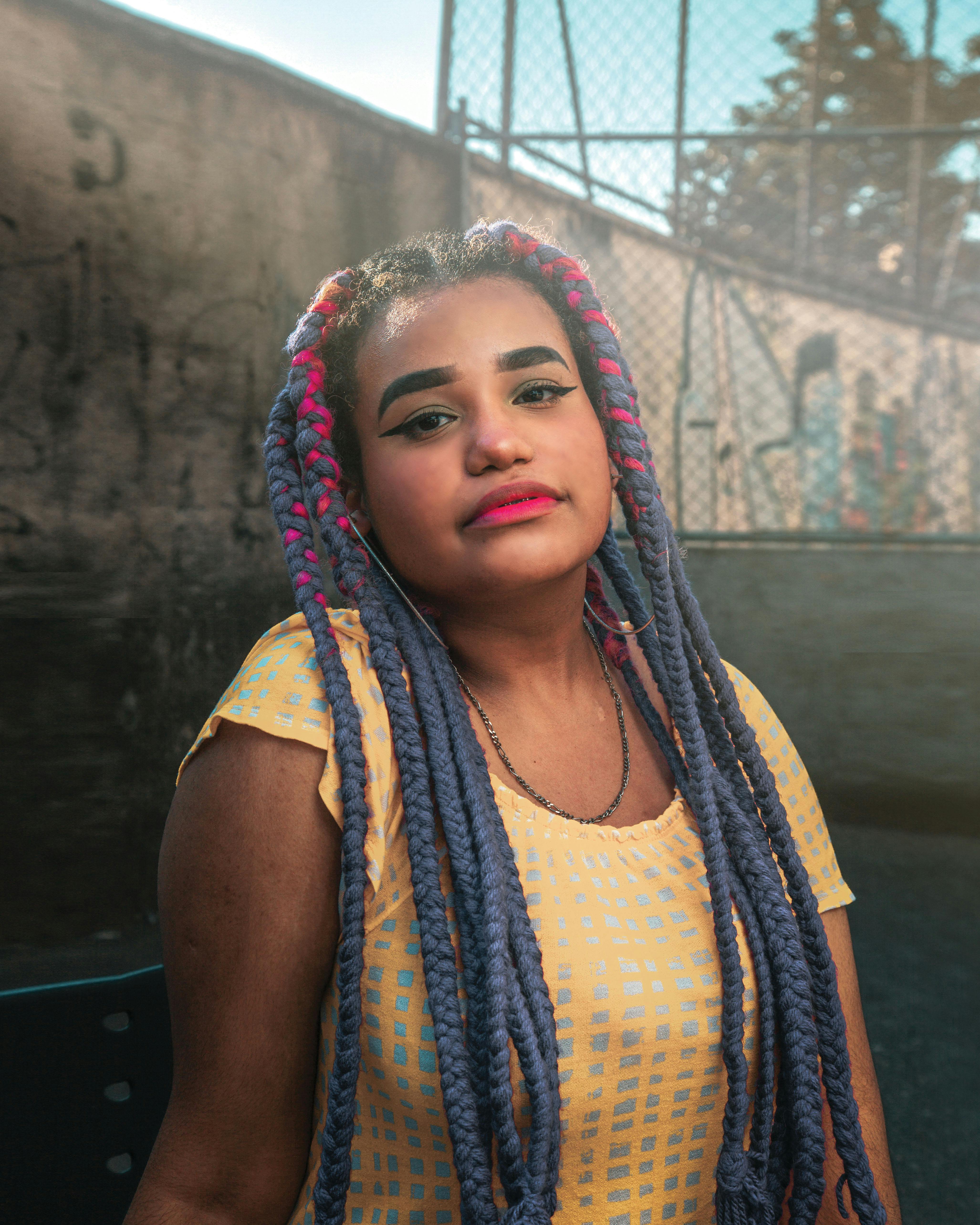
Summer in the DMV area means heat, humidity, and the kind of thick, sticky air that can undo a hairstyle before lunchtime. If you have ever left the salon with sleek, freshly done braids only to watch your edges puff up by the time you get to the car, you already know the problem. The good news is that braids are actually one of the best styles for hot, humid weather, as long as you know how to protect them. A little planning before your appointment and a few simple habits afterward can be the difference between braids that look fresh for weeks and a style that frizzes out in days.
Why Humidity Is Hard on Hair, and Why Braids Hold Up Better
Humidity works by pulling moisture from the air into your hair, which causes the hair shaft to swell and the cuticle to lift. For loose, unprotected hair, that shows up as frizz, flyaways, and lost curl definition almost immediately. Braided styles are more resistant because the hair is already sectioned, tensioned, and sealed into a pattern, so there is less loose hair available to react to the moisture in the air. That said, braids are not completely immune. New growth at the root, baby hairs along the hairline, and any looser sections can still frizz in heavy humidity, which is why a few extra habits matter during the hottest stretch of the year.
Frizz Prevention That Actually Works
The biggest frizz mistake people make with braids is overcompensating with heavy products. A thick layer of gel or grease might smooth things down for an hour, but it usually attracts more moisture and looks worse by the afternoon. Instead, focus on lightweight, water based products applied sparingly, ideally two to three times a week rather than daily. An anti humidity edge cream applied in a thin layer along the hairline in the morning does more to prevent frizz than reapplying product throughout the day. If you know you will be outside for hours, a light silk scarf tied loosely over the edges until you reach your destination can also help.
Protecting Your Edges in Heat and Sweat
Edges take the most visible damage in hot weather because they are the finest hair on your head and sit closest to the skin, where sweat and humidity both concentrate. Keep edge routines gentle. A soft bristle brush and a small amount of light gel or edge cream is enough for daily upkeep. Avoid brushing edges when they are already sweaty, since wet hair is more fragile and prone to breakage. If you are prone to bumps or irritation along the hairline in summer heat, ask your stylist about slightly looser tension at your next install, especially near the temples where skin tends to be more sensitive.
Sweat, Scalp Care, and Workouts With Braids
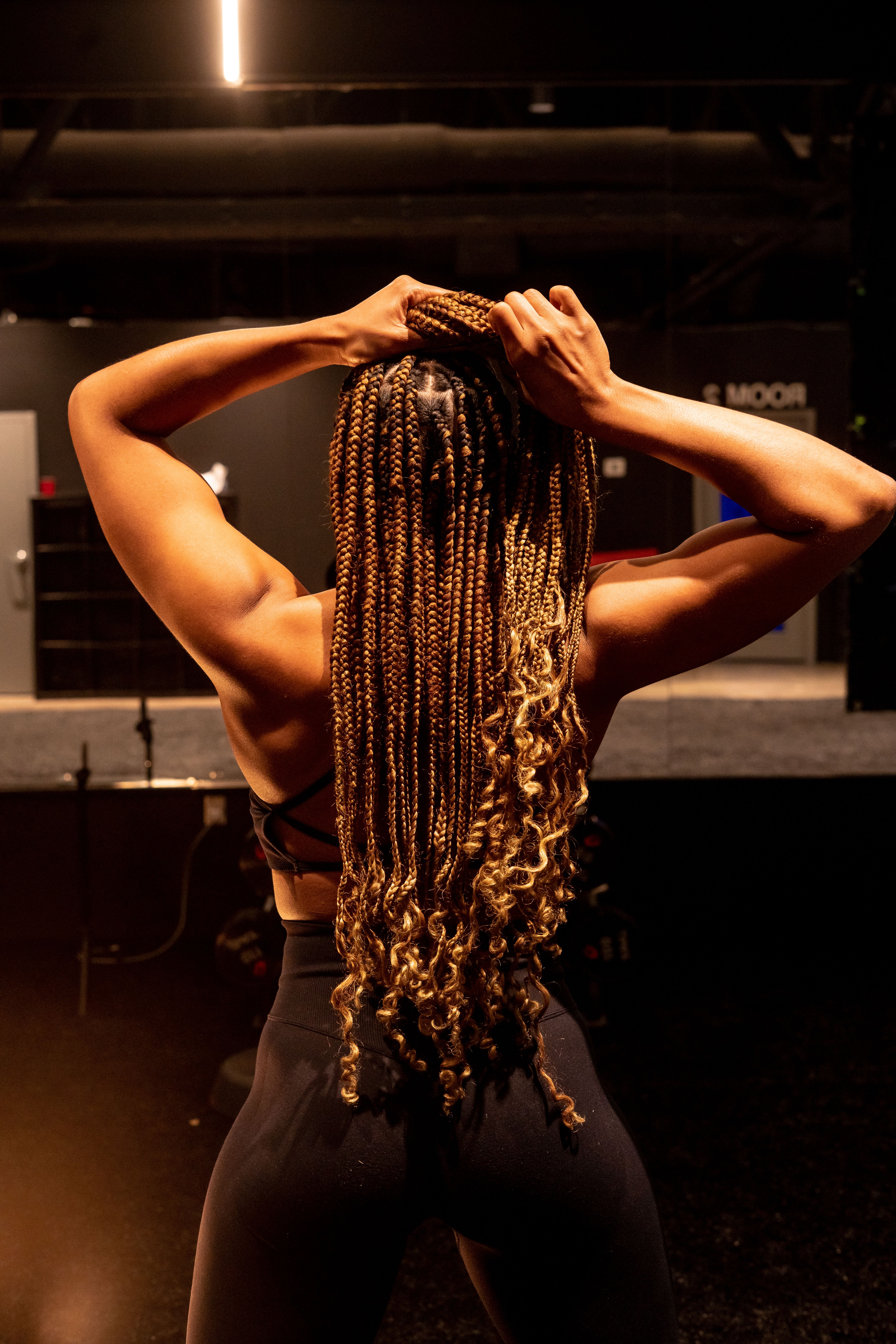
One of the best things about braids in summer is that you can work out, swim, and stay active without redoing your hair every time. A few habits keep things comfortable between wash days. Rinse sweat and chlorine out of your scalp promptly after a workout or a swim rather than letting it sit, since both can lead to buildup and itchiness in humid weather. A diluted apple cider vinegar rinse or a lightweight scalp refresher spray between full washes can cut down on odor and itch without disturbing the braid pattern. Keep a small microfiber towel in your gym bag to blot sweat from your hairline and neckline rather than rubbing, which can loosen edge hairs over time.
Satin Protection Overnight and On the Go
A satin bonnet or satin pillowcase remains the single most effective tool for keeping braids looking fresh through a hot, humid stretch. Cotton pillowcases pull moisture and oil out of hair while you sleep and create friction that leads to frizz, while satin lets hair glide instead of catching. If a full bonnet feels warm on hot nights, a satin lined baseball cap or a silk scarf works well for daytime protection during outdoor activities, commutes, or errands where wind and sweat are unavoidable.
Choosing Products Built for Humid Weather
Not every product marketed for braids is designed with humidity in mind. Look for lightweight leave in sprays and creams built around ingredients like glycerin, aloe, or light botanical oils rather than heavy butters and waxes, which tend to sit on top of the hair and attract more frizz in sticky weather. The American Academy of Dermatology recommends leave in conditioners and ingredients like argan oil or glycerin to help textured hair hold moisture in changing conditions, and the same logic applies well to braided styles that need to stay resilient through a humid Maryland summer.
Sun Exposure and Keeping Color Vibrant
Heat gets most of the attention in summer hair care, but direct sun exposure plays a role too. UV rays can dry out hair over time and fade color treated braiding hair faster, especially on styles with lighter or vibrant colored extensions. Dermatologists point to the same fix that works for skin, which is coverage. A wide brimmed hat or a loosely tied scarf during long stretches outside, at the pool, or at outdoor events protects both your scalp and your color from the cumulative effects of sun exposure. If you do a lot of time outdoors during the summer months, mentioning that at your appointment helps your stylist recommend a style and part pattern that holds up well to regular hat and scarf wear.
How Long Your Braids Will Actually Hold Up in Summer
Heat and humidity do not usually shorten how long a style lasts overall, but they do change how much upkeep it needs along the way. A well protected set of knotless braids or box braids can still comfortably reach the same four to six week range you would expect in cooler months, as long as you stay consistent with scalp care and nighttime protection. We break down the full week by week timeline, including what normal wear looks like versus a sign you should come back sooner, in our guide to how long knotless braids actually last.
When to Book a Touch Up Sooner Than Usual
A few signs point to booking a touch up earlier than your usual schedule during a hot, active summer. Significant new growth at the root that is pulling on the pattern, persistent itchiness that does not improve with a scalp rinse, or braids that have loosened noticeably from frequent workouts or swimming are all reasonable reasons to come in a little early rather than waiting out the full stretch. It is easier and gentler on your hair to refresh a style a week ahead of schedule than to leave a worn out set in for too long while fighting the heat.
Planning Around the Hottest Months
If your summer includes vacations, pool days, festivals, or just a long stretch of high heat and humidity, it helps to time your braid appointments around that calendar rather than reacting after the fact. Coming in for a fresh set a few days before a trip or a big outdoor event means you start the season with a style built to handle it, instead of trying to manage frizz and edge damage on top of everything else going on that week.
Booking Your Appointment
At Ani Braids, we install every style with the Maryland summer in mind, from tension that holds up through workouts to patterns that stay neat through humidity and heat. If you are trying to decide between knotless braids, box braids, or another protective style for the season ahead, we are happy to talk through what will fit your routine and activity level. You can book your appointment online in just a few minutes, and we will help you plan the right style and timing for the months ahead.
Frequently Asked Questions
Do braids frizz in humidity like loose hair does?
Braids are more resistant to humidity than loose hair because the hair is already sectioned and tensioned, but new growth, baby hairs, and edges can still frizz. Lightweight anti humidity products and satin protection help keep those areas smooth.
How often should I moisturize my braids in the summer?
Two to three times a week with a lightweight, water based spray or light oil is usually enough. Applying product every day tends to cause buildup and can actually attract more frizz in humid weather.
Can I work out or swim with braids?
Yes, braids are a great low maintenance option for an active summer. Rinse sweat or chlorine from your scalp soon after exercising or swimming, and use a light scalp refresher between full washes to keep things comfortable.
Will heat and humidity make my braids not last as long?
Not usually. A well cared for set of knotless braids or box braids can still last the typical four to six weeks in summer. Humidity mostly affects how much daily upkeep the style needs, not the overall timeline.
What is the best way to protect my braids at night in the summer?
A satin bonnet or satin pillowcase is the most effective option year round. If a full bonnet feels too warm on hot nights, a lightweight silk scarf is a good alternative that still prevents friction and frizz.
Hot, humid weather does not have to mean constant hair maintenance. With the right products, a few protective habits, and a style built to handle an active season, your braids can look fresh from your first day out of the chair through the last hot weekend of summer.